skip to main |
skip to sidebar
Starting to update the rest of my adventures, finally. I started my trip by writing somewhat detailed entries into a notebook, but lost the energy to do so. Luckily, since I took pictures, I am reminded of at least the more exciting parts of my visit.
On the first of November, Mom and I decided we should go to Tsukiji and get in on some of the fish market action that takes place there. Since the most exciting part-- the tuna auction-- is apparently closed to the public (and is at 5am anyway), we decided just to wander around the gigantic market and eat lunch afterward.
We left Fussa around 9 in the morning. Although our original itinerary said to get off the Chuo Line at Yotsuya Station and switch to the subway from there, Mom thought that it'd be better if we got off at Tokyo Station and jump on a line bound for Hatchoubori, and then from there take the Hibiya subway line to Tsukiji Station. I don't think we saved any time or money, but it was an experience, trekking down, down, down, and down farther still in Tokyo Station until we reached the Keiyo Line platform. From there it was only one stop to Hatchoubori, and from Hatchoubori it was only one stop on the Hibiya subway line to Tsukiji. It was a tiny station, and the bathroom was yucky. I wasn't surprised.
Around the corner from the station was the Tsukiji Hongwanji, a rather large and very South Asian-styled Buddhist temple. The architecture was fascinating, and the inside was even more ornate than the outside. It reeked of incense, and Mom and I at first thought we had stumbled upon the latter half of someone's funeral. When we exited, we noticed that volunteers were busily packing welcome bags for an appreciation ceremony to take place later for rich people who contributed large sums of money to a local dentistry college. We didn't feel bad after that point.
Mom wanted to check out a museum that supposedly had exhibits with information on the fish market. Luckily it was right next to the market and we didn't have to go out of our way to find it because it turned out to be a single room with books and pamphlets on fish and maps to guide you through the different vendors in the market. It was a little disappointing, but we went ahead to the market itself.
Tsukiji's fish market is huge. Imagine, if you will, the largest warehouse you have ever seen, and multiply it by like, 5 or something. I may be exaggerating, but it's pretty dang huge inside, and it houses dozens (hundreds maybe?) of vendors. We arrived a bit before noon, when the market had died down and all the fish mongers were packing up to leave. It was still busy, still full of tourists, and many vendors were still selling fish (amongst other, less fish-like denizens of the deep). The alarming thing, though, was that through the narrow corridors zoomed guys on bicycle-powered carts, three-wheel motorbikes, and heavy-duty motorized carts that were probably zipping by at 15 miles an hour on the wet, fishy floors. It's not a place for casual tourists with large backpacks overflowing with Naruto posters and rolling luggage-- it's a place of srs bznss where restaurateurs and grocery sellers buy their fresh fish for the day, or for Average Joe to get a good price on his tuna steak dinner. Etiquette prevails at the market, and Mom read on the Japanese site that you shouldn't haggle prices with the fish mongers, as it's seen as being disrespectful and rude, challenging the price that an experienced fisherman places on his catch. "Can you make this cheaper?" is equivalent to calling him a liar, and may get you booted out of his 3x5 space with many harsh words following you.
After dodging carts, puddles, and tuna carcasses, Mom and I decided that looking at thousands of dead fish on ice in various states of dismemberment made us hungry for the real thing. We headed to the restaurant area where, even hours after they had opened, there were lines flowing out the doors to get the freshest of the day's catch for lunch. We were surprised at how popular the non-fish places were. Bafflingly, katsudon and ramen shops had the same humongous lines. We shrugged, and waited for a random place to seat us. Luckily, we only waited about 20 minutes or so for a table. Not too bad, considering people claimed to have waited for hours to get a seat at Tsukiji restaurants.
We chose a place called うまい鮨勘 (Umai Sushikan), which literally means "Tasty Sushi Sense." We were sat on the sushi bar, which Mom disliked, but I enjoyed watching the chefs work their magic by quickly squeezing together the nigiri balls and slapping the freshly-sliced fish on top, all at breakneck speed, and all while calling out "Welcome!" and "Thank you!" and glancing down at tiny hand-written orders. I got a plate with some variety, from tuna and salmon to scallop and roe. The egg was cute. While I usually don't care much for egg, this one had "うまい鮨勘" stamped on the side. That was a nice touch. The miso soup, however, was something I did not enjoy even slightly. It was made with fish scraps and tasted exactly like hot ocean brine with thin bones and vegetable particles floating in it. Mom drank both our bowls. I couldn't stomach it.
Mom had left her denim jacket at the library the previous day, so I lent her a long-sleeved shirt to wear for the day. Apparently she really wanted to lose my shirt, too, because she left it in the restaurant. Luckily we realized it was gone minutes after leaving the place, so we ran back and retrieved it. We briefly visited a small shrine just outside the fish market area and headed to a hospital where they had a free observation deck on the 47th floor. It was extremely warm, but the view was great. Mom rested her feet for a while as I took lots of pictures out the windows. She asked a lady for directions to the nearest JR station, and out we headed.
We walked through Ginza on our way to the Yuurakucho station. Although it's a shopping mecca, I wasn't impressed by the street we walked along. It was mostly office buildings with young men in suits, squatting on the sidewalk while smoking and chatting on their cell phones-- an odd sight, indeed. Just before the station, I was distracted by a troupe of girls doing a traditional drum performance outside of a newly-opened pachinko hall. I stopped to take video of them-- it was impressive how much energy they had. My arm was getting tired just holding the camera, and here they were jumping up and down beating enormous drums strapped over their shoulders. Crazy.
We hopped on a line bound for Ueno, as Mom wanted to walk from there to Asakusa. We briefly stopped in Ameyoukocho, an alley full of small shops and street vendors peddling cheap wares, to ask for directions before taking the very long and somewhat painful walk to Asakusa. It took us almost an hour to get to the Kaminarimon, which is the gigantic red lantern that welcomes you to the street where all the vendors set up shop. The road we took to get there was lined with stores specializing in 仏壇 (butsudan), which are altars for deceased family members. It was extremely creepy, and it was obvious that that part of town was probably aging and full of a lot of old people on the verge of kicking the bucket.
When we finally reached Kaminarimon, evening was rapidly approaching and we only had maybe an hour or two of sunlight left. The first vendor we came across on Nakamise (the road where all the peddlers set up shop) was selling fresh-made red bean-filled ningyoyaki, which is a small cake made of flour and egg. molded into shapes. We bought two bags to take home to Obaachan and a bag of hot ones to eat while we walked. The people selling them were exceedingly brusque, which totally surprised us. All of the vendors were loud, rude, and pushy, and I couldn't help but be reminded of dirty carnies in America. I felt this whole street was a giant tourist trap, and Mom agreed. We kept snagging samples at the osembe shops, and Mom deliberated on whether or not to buy a bag. She ultimately decided against it, as they were quite expensive (as were all the other things on that street). The ningyo were cheap, at least.
We visited the temple at the end of Nakamise, called Sensoji. It's the oldest temple in Tokyo and is something like 1500 years old. Plenty of people were milling about, clothing statues, washing their hands at the entrance, tossing money into the offering bins and praying. Prayer rituals are serious business in Japan, and people had some elaborate arm gestures and bowing maneuvers carefully choreographed to achieve maximum levels of Buddha-pleasing. It was impressive.
As the sun began to dip down, Mom and I discussed what we would do for dinner, as we hadn't eaten since lunch many hours previously, and although we weren't starving we figured we should eat something. We wandered around Asakusa looking for a good deal on food, but decided that perhaps Shinjuku might offer something better. Instead of walking back to the JR station in Ueno we hopped on the subway and took it back to Ueno station where we got onto the Yamanote heading south where we expected to switch to the Chuo line back to Shinjuku (the reason being that Tokyo is the terminus for the Chuo line and we'd be guaranteed a seat). However, since we were able to get a seat on the Yamanote in Ueno, we rode it the whole way to Shinjuku, even though it was like taking a route that went around 3 sides of the square. We didn't mind, and welcomed the rest.
When we got into Shinjuku, it was packed with people, like usual. We went into Kabukicho to look for a restaurant and ended up wandering for almost an hour, unable to find any place that was both inexpensive and tasty-looking. We did see a trio consisting of a drummer, a saxophone player, and a guy holding a banner for a bar; they were playing "Izakaya," a kayoukyoku song about a man trying to pick up a girl at a plain, generic bar ("There's no pictures, no flowers, no music, no words, no jokes or anything to decorate this kind of bar"). It was cute. We also saw advertisements for host bars full of tanned, bleached, airbrushed young men who would be more than happy to let you buy them expensive alcohol and food to fulfill your sad, lonely office lady life.
We got lost looking for the Isetan, tempted by its purportedly abundant food basement, and although we found it, it was close to closing time, so we sampled milk and tofu, pickles and salad dressings, weighed the benefits versus the costs of some of their produce, and ultimately left with nothing. We caught the train at Shinjuku station and headed back to Fussa. When we arrived, we had enough time to peruse the deals at the Ozam before they closed for the night. There we picked up dinner-- fried oyster bento box, korokke, and gyoza, all at half-price. We enjoyed our dinner at home, and although it was late and we were tired, it was oh-so satisfying (and probably a lot better than anything we could have picked up for 4 times the price at a normal restaurant). It was a fun-filled day, and exhausting because of all the walking we did. 
Last week ranged between insufferably boring and fun and exciting. After a weekend of hanging out with friends, I woke up late this morning to a breakfast of rice, natto and miso soup. Mom and I went to Yokota to sign up for a tour of Kamakura and Enoshima, which we were disappointed to find out fell on the day that I was to go out with my friends for the last time before leaving Japan. Mom saw a silver lining-- she just saved $66.
We walked down to the side of the base close to Hamura where Mom pointed out all of the old and tiny (and decrepit) buildings that used to house Americans back in the day. She was surprised to see that they still stood and people lived in them. As we walked toward Higashi Fussa, Mom commented on the fact that where all these neighborhoods and tall buildings stood there used to be fields and a singular mulberry bush from which she would pick berries on her way to school. The one house that stood along the path where she walked was so huge to her eyes, as it was perched atop a wall of stone and towered above the fields; apparently it housed an assemblyman. A small cul-de-sac now exists there. The red light district she was forbidden to go near still stands, and even at 3:30 in the afternoon there were shady characters lurking about. We hurried along to do some grocery shopping before heading home.
The most exciting discovery of the day was that hotate was on sale today. It has become my single most favorite food in the world. Mom and I both agree that we can eat it every day.
Tonight I watched the most amazing game show ever. I cannot recall the name, but it pitted two teams of five contestants against each other-- one team was made up of average joes, the other was made up of celebrities. The set seemed to be comprised entirely of green screens or possibly giant TVs, as large images and animations were crucial components. The teams each had to earn points by advancing through multi-part stages where each level increased the amount of points earned and the contestants in each team would answer in sequence.
The first stage was called BRAIN TOWER-- a picture would be shown on the screen and the contestant would have to answer within a couple seconds. Each level was a "floor," and if a contestant was unable to answer or answered incorrectly, the team would "drop" back to the first floor of the tower, their seats shaking as they dropped (this was all green screened, so they didn't actually go anywhere). Pictures shown included a stove, walrus, flowers, and butterflies. Neither team made it to the final floor, but the celeb team was especially sad, as the first guy on their team was unable to name any of his pictures, and thus they were unable to advance to even the second level.
The second stage involved answering a question or completing a song with each team member writing a character. For instance, one question was "うさぎ is to ラビット as きつね is to _ _ _ _ _" (usagi is to rabbit as kitsune is to) with the correct answer being "フォックス" (fox). Another one was a white guy saying "church" and they had to supply the Japanese equivalent, "きょうかい" (kyoukai). This was a less exciting but still fun stage.
The third stage was a little more stressful, as the contestants had to "ride" a boat down a river. In a similar fashion as The Typing of the Dead, an enemy would slash at the contestants and a kanji would pop up on the screen. The contestant at a kana keyboard would have to type its reading. The first levels of the stage were fairly easy, but towards the end of the stage they were literally just punching in any pronunciations they could think of.
The final stage was funny, and fairly difficult. A topic would appear, and each contestant had to supply the answer in 15 seconds, or else a "bomb" would drop on their head and end the stage. The topics included "Name 5 American states whose names start with "ア" (all of the "A" states, plus Iowa and Idaho); "Name 5 Japanese prime ministers whose names have had the character "田" (Ta, or Da)"; "Here are 5 world treasures-- name the country from where they originate" (this one was especially hard, as Cambodia was one of the answers).
My description doesn't do the show justice, but trust me-- it was a cool show. I sort of wish that America had similar game shows, as this one was really fun to watch, and the contestants all seemed to have a lot of fun. There was also a lot of friendly banter between the teams and amongst the contestants, and even though I didn't understand everything that was going on, it was quite engaging.
Other than that, today was a slow day. Mom and I went grocery shopping at Ozam, Inageya, and Seiyu. She headed to the Base to run a couple errands while I took the groceries back to Obaachan's and went for a 15-minute run. Except for the alarmingly narrow streets and speedy cars, Fussa is a nice place to have a jog as there is a lot to see and a lot of people have interesting yards full of fruit trees, gardens, and sometimes small farms. Dogs also seem to be popular, so I got to see a few dog walkers with their adorable pets.
Mom was excited because she found 8-piece nigirizushi sets for very cheap, but she got mad at me when I started taking pictures of it and ripped off the price tags (although you can't actually see the prices in the pictures, but never mind that).
I'll have to find something to do this week-- it's been pretty slow since we've been at Hitoshiojichan's, and I am starting to feel slightly stir-crazy (even though for the most part I don't mind hanging around the house, watching weird TV and eating food). At least I have an internet connection, so I can stay up-to-date with the world. I ask Mom what they're saying on the news, and she really has trouble translating for me. I at least understand enough to get the general gist of the broadcasts. I wish I could understand more, though.
Sometime I'll update from the first two weeks of being here. Not a whole lot happened, though, so I've been procrastinating. I'll get around to it soon. Hopefully :3
I woke up feeling significantly better than before, so Mom and I decided to head into Tokyo to explore a little bit. We had no real plans, other than find something to eat and some places to take pictures. We bought the Tokunai Free Pass, which allows the ticket holder to ride around the Tokyo area all day for a flat fee. There is a train that goes from Ome all the way to Tokyo, so we hopped onto that and rode the hour or so it takes to get into the city. From Ushihama to Shinjuku, a sleepy boy sat next to me, his head drooping into his lap the entire ride. Every couple of minutes, he would wake up, blink, sit up, and then nod off again, head dangling just above his knees. I wanted to take a picture, but thought better of it.
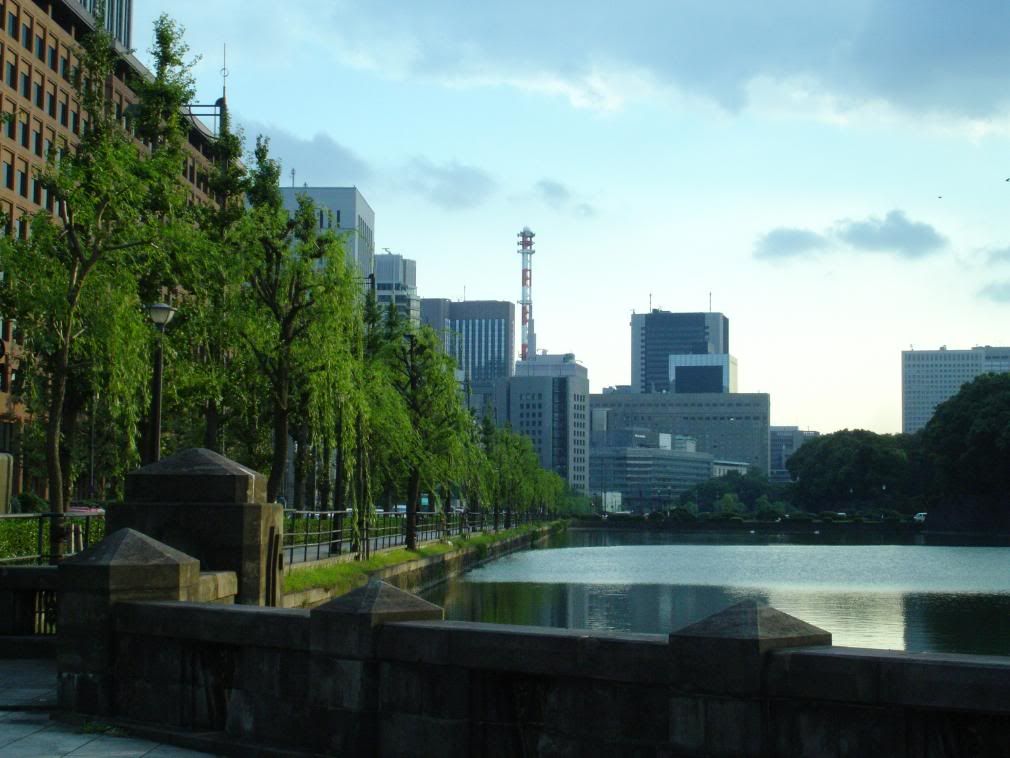
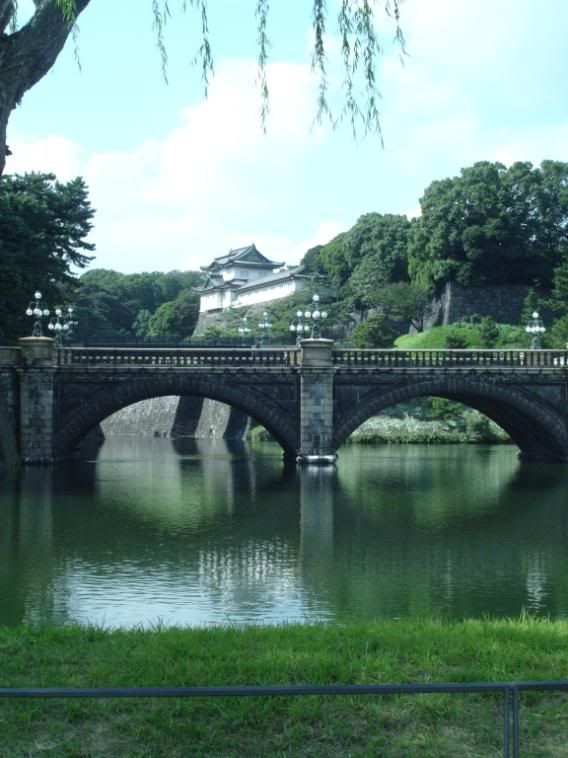
When we arrived in Tokyo Station, we stopped quickly at the bathrooms. When we were washing our hands, Mom told me she was unable to flush the toilet no matter what she did, and she felt bad for the next person. I told her that she needed to hold her hand in front of a sensor, and it would flush after a couple seconds. She said that she didn't know you have to leave your hand there-- she thought she had to wave it or something. "Can't you read?" I cried, amused because I can't read the instructions, yet she can. She laughed, and we shook our hands dry, as there are no paper towels in train stations. We left the station and decided to walk to the Imperial Palace and explore the grounds. Mom told me brief histories of the palace, and how it was first used during the Meiji period, after the Shogun had given the power back to the Emperor. We saw many school children taking tours of the grounds and foreigners taking pictures.
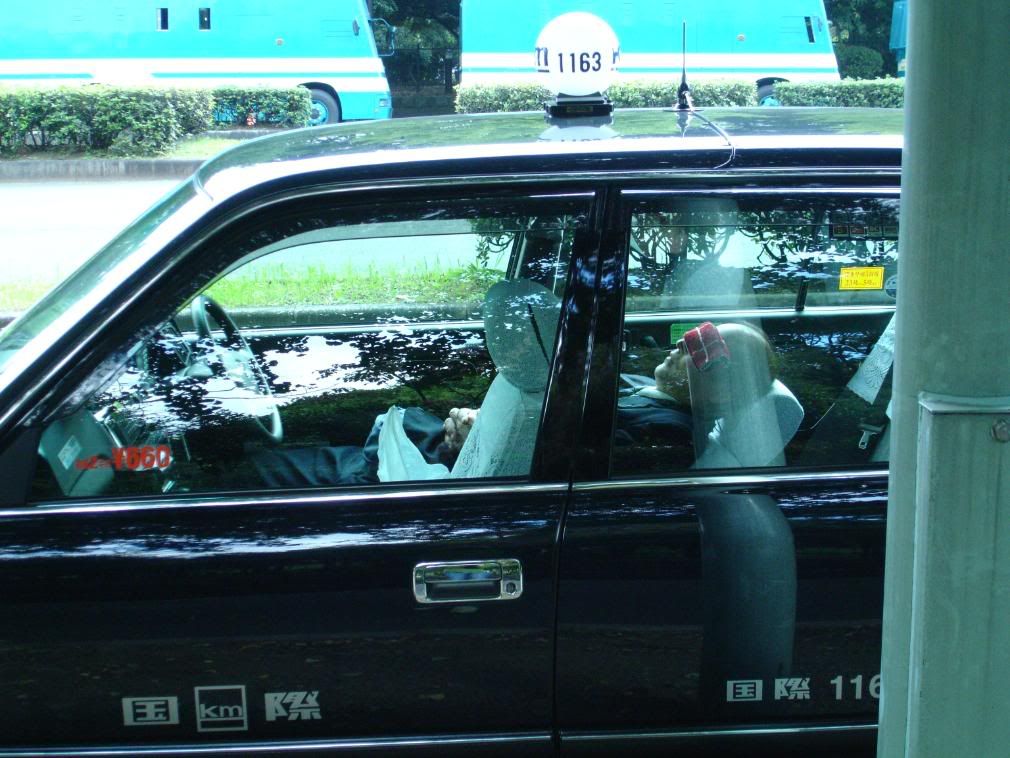
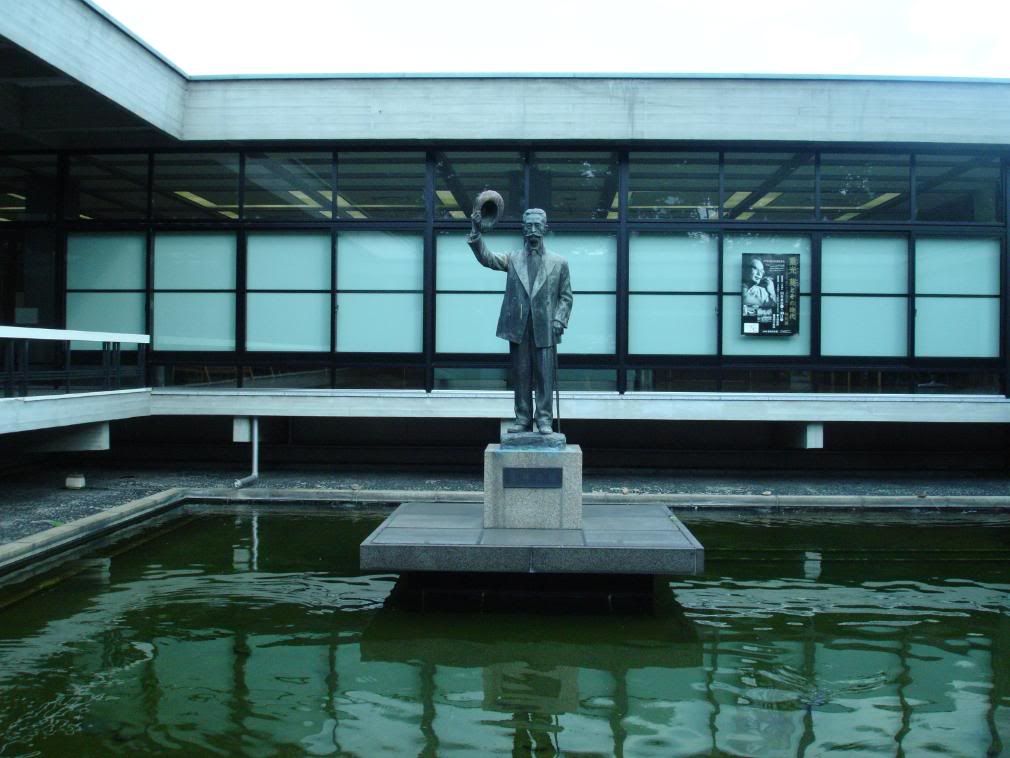
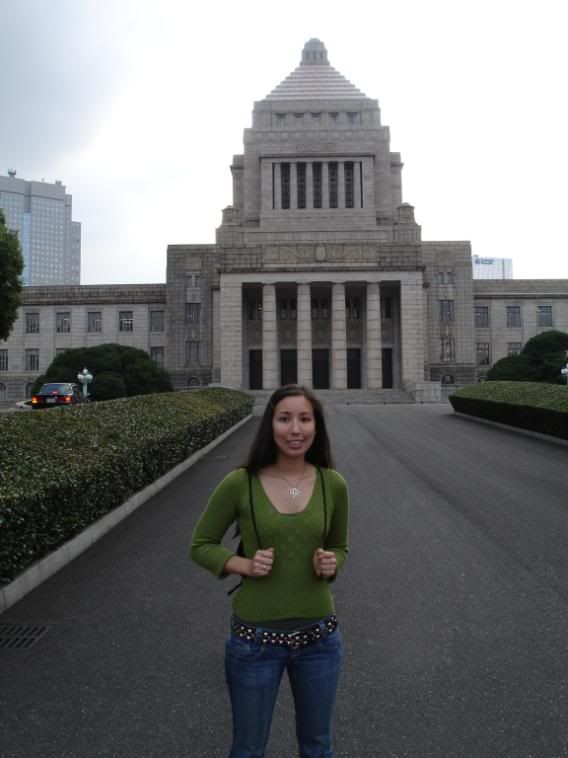
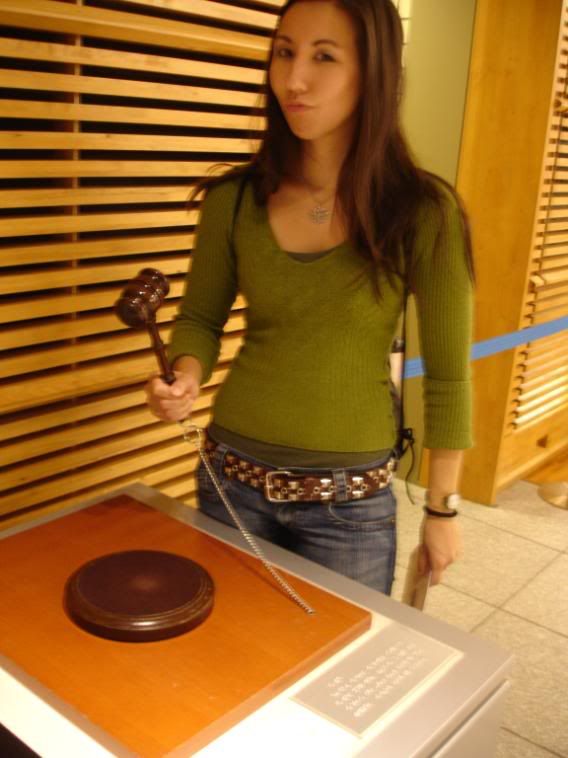
After spending a good chunk of time taking pictures, we headed to the Diet building. Along the way, we passed about half a dozen taxis full of sleeping cabbies. I found it fairly amusing. When we reached the Diet, we asked the gate guards if they were doing tours. We signed up for the next tour, which would be in an hour, and walked to the Kensei Kinenkan (Parliamentary Museum) and poked around for about half an hour, checking out the historical exhibits. We were a little crunched for time, so we hurried back to the Diet building and waited in their lobby. The lady at the counter was kind enough to switch the video language to English, so I could understand it. I felt a little bad, though, as a few minutes into the video about 10 Japanese people came in. They didn't make a fuss-- I assumed they didn't mind, or were too polite to say anything.
The building is quite fantastic, but sadly un-Japanese. While the builders wanted to use mostly materials from Japan, they still fashioned it into a very European style, albeit adorned with chrysanthemum seals everywhere. There were intricate stained glass ceilings that were made of glass from America, England, and Germany; they were the only things specifically mentioned that were foreign in origin. Mom kept mentioning how much money was dropped on the construction of the building, and how much money goes into the rooms the Emperor and imperial family use (which they only visit maybe once or twice a year). "Tax payer money at work," she kept saying, as we walked past the empty, lavishly decorated rooms. Many of the people on the tour began to nod off when we sat in nosebleed seats of the assembly room, looking down onto the very Congressional house floor. A chipper female voice told us all about how parliament works and what the building was made of, but since I could barely understand anything, I found myself desperately trying to stay awake by focusing on the maintenance men performing electronics checks on the vote counters. When we got to walking again, our tour guide told us that they had recently replaced the cushy red carpet that lines the hallways, but somehow these giant, dark stains of mysterious origins appeared. I am not sure why he told us this.
Probably what fascinated me the most were the smoking stations. There are areas in the hallways for smoking, but they are obscured by glass walls and the smoker must stand next to an air intake fan, much like a fume hood, just sans hood. I watched half a dozen office workers hunched over these smoke boxes, desperately getting their nicotine fix in what I found to be a rather odd fashion.
The end of our tour led us through the garden at the front of the building where there is a walkway full of plants from all over Japan. The garden starts with plants from the southern islands, and as you progress the plant species become gradually more northernly, ending with cute pine trees from Hokkaido. We took a few pictures of the building itself, and headed back to the train station.
Mom was bent on catching a free bus that ran to Nihombashi, so we walked through the crowded Toky Station to the other side, where we could catch the bus. As we waited, a protest for what we assumed to be a hospital worker union marched by. The people were all dressed in white hospitalish clothing and waving flags, balloons, and signs. After about five minutes, the bus arrived. It was tiny-- smaller than the DASH in Los Angeles, and we decided that in the time it took for the little bus to fight through traffic we could have walked to Nihombashi twice.
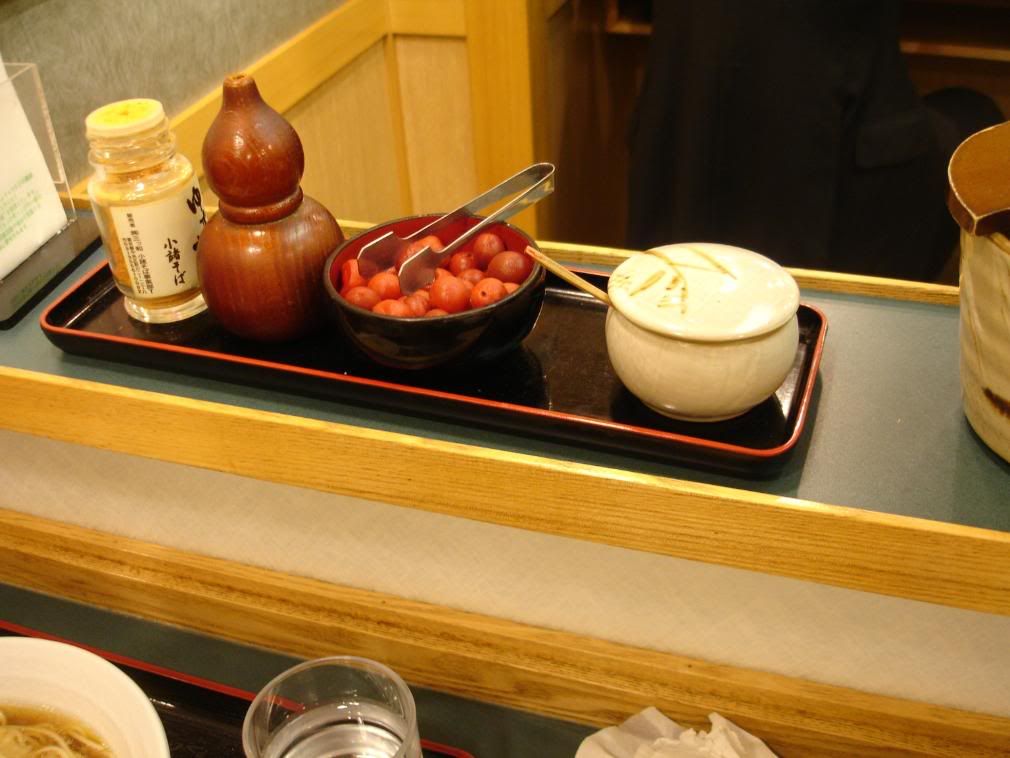
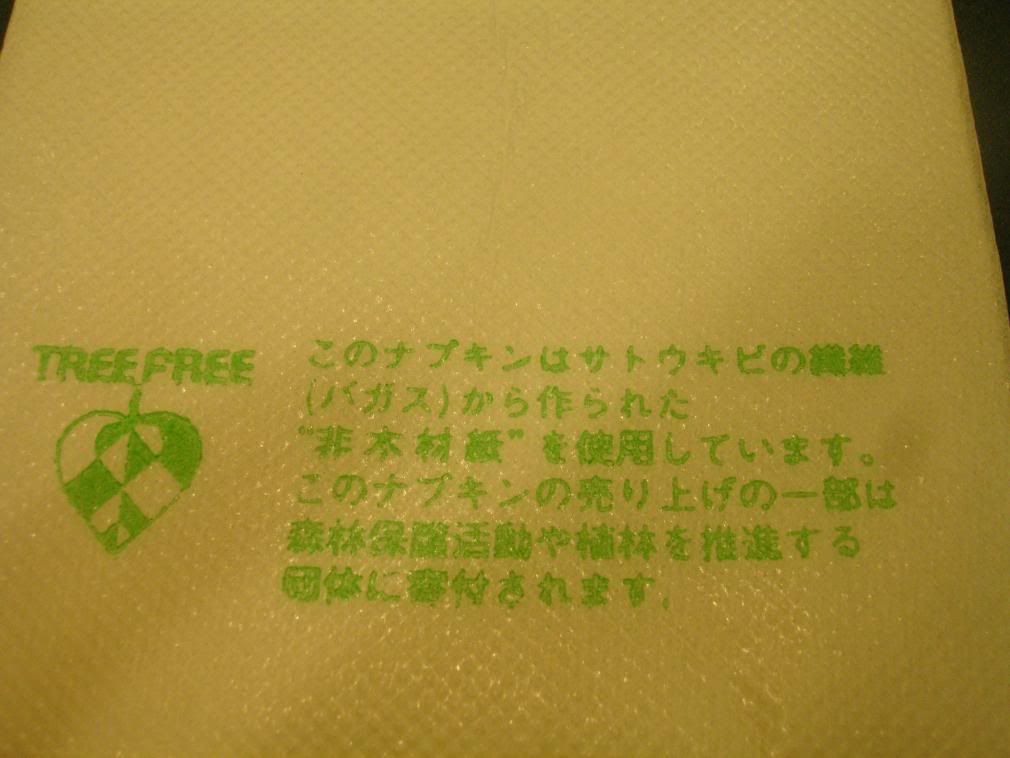
By this time, we were starving. Desperate for anything that came along, we ducked into a small alley and found a little noodle shop with a ticket vending machine out front. We found those endearing, so we decided to eat there. The restaurant turned out to be quite good-- the food was cheap, and on the tables they offered wasabi, noodle water (if you decided you needed something to help you get all the bits out of the bottom of your bowl when you're done with your soup), and karikari umeboshi, which I discovered that I like quite a bit (I greatly dislike normal umeboshi). Their napkins also solved a mystery that had been bugging me in Japan. A lot of restaurants offer some very shiny paper napkins, and I could not understand why they were that way. Printed on the napkins in this shop was the explanation that they were made out of sugar cane fibers and were "tree-free" as they did not contain any wood products. I thought that was clever. I like these funny shiny napkins even more now.
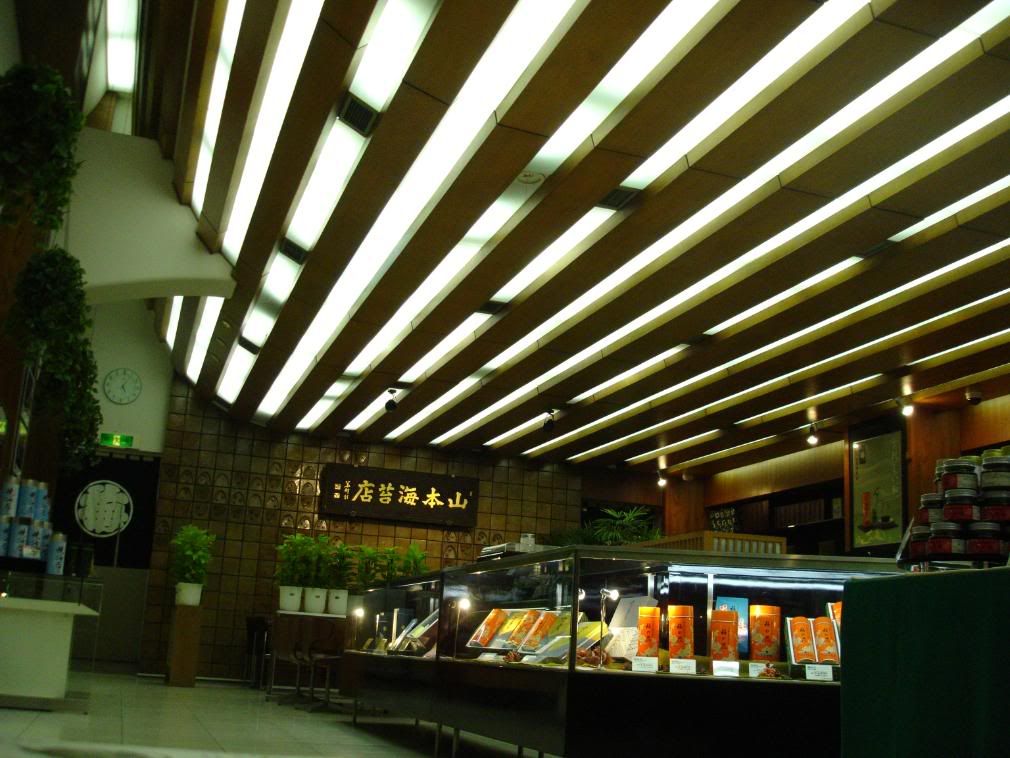
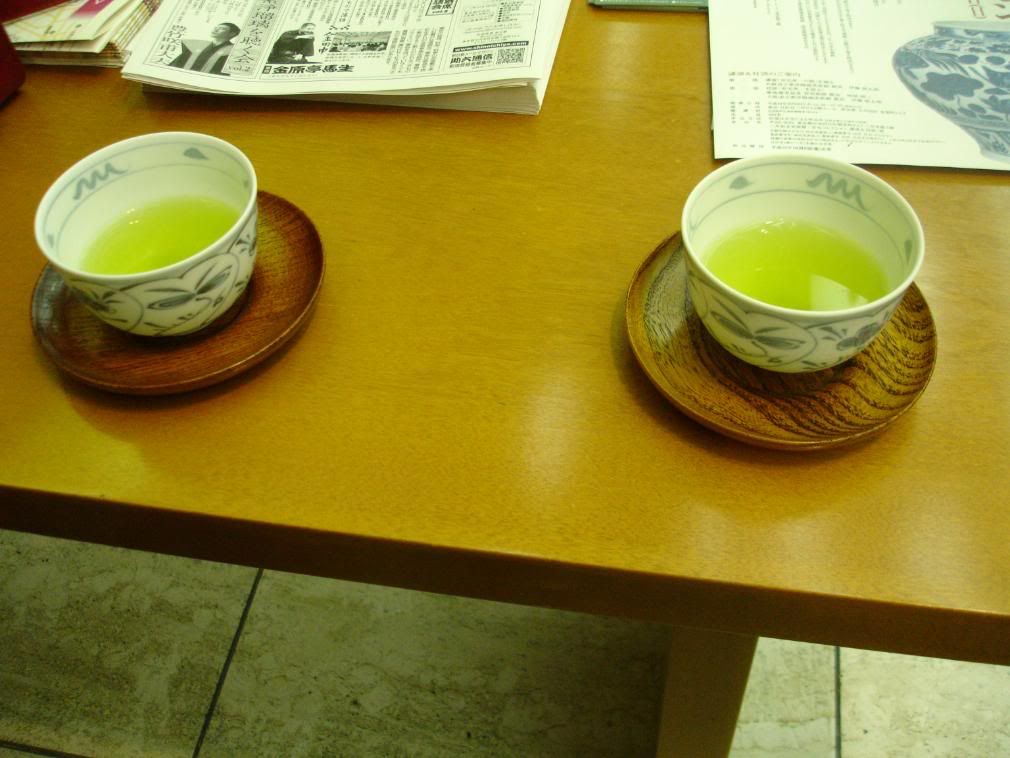
After dinner, we headed to the Yamamotonoriten, which is a store specializing in seaweed and teas. We bought some hojicha and sat down for a complimentary cup of ocha. After that, we headed into the Mitsukoshi across the street. We poked around the ultra-expensive clothes before we went down to the grocery level, where all of the food vendors were more than happy to give us a second dinner in the form of samples ranging from crusty bread and gyoza to chocolate truffles and cheesecake. It was fun and delicious. We left Mitsukoshi and started heading back toward the station, ducking into the Takashimaya and doing much the same as we did in Mitsukoshi, albeit with less free food offerings.
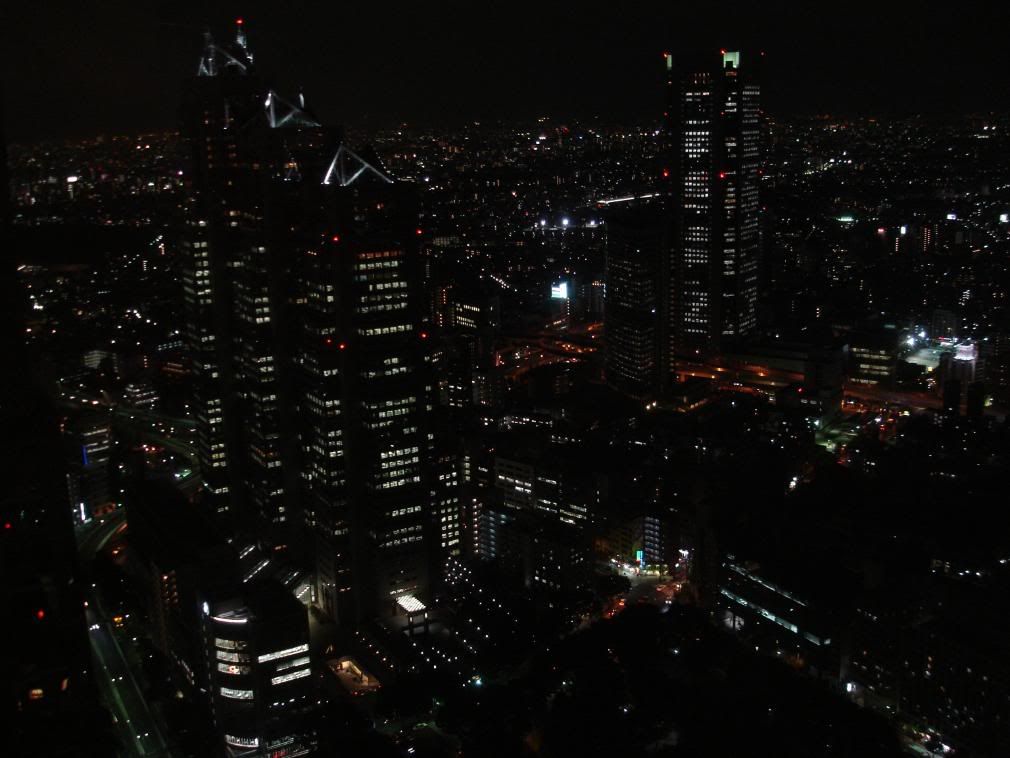
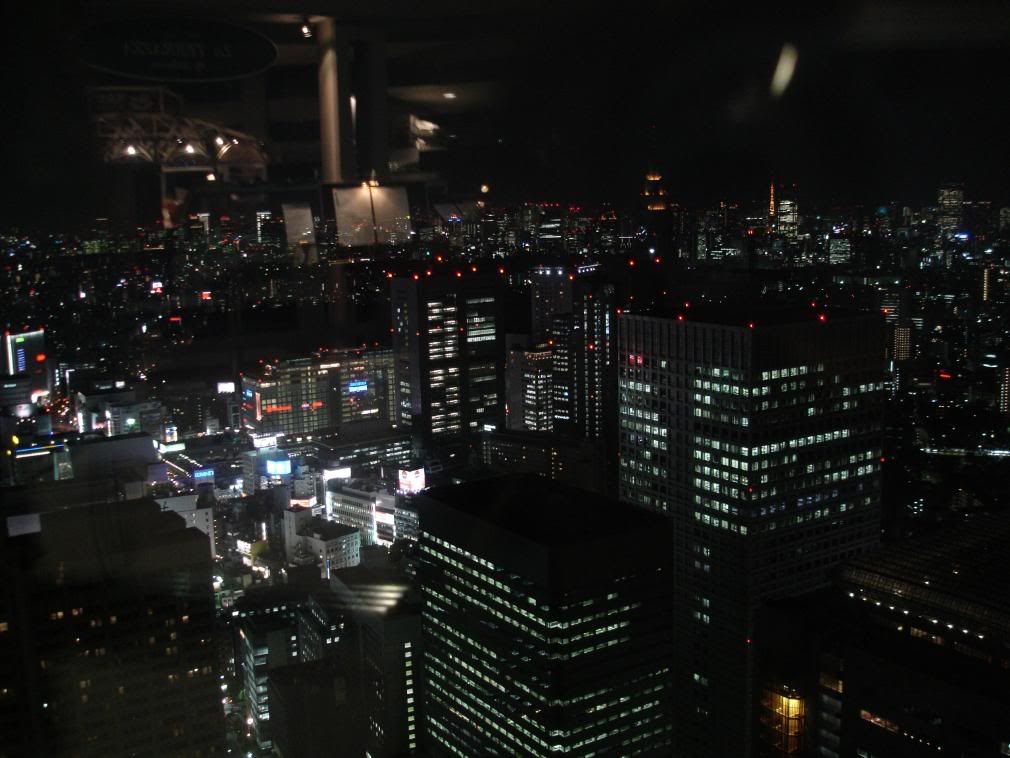
We caught a train to Shinjuku so we could look out the observation deck on the 45th floor of the Metropolitan Building. I tell you what-- that is a FAST elevator. We were on the 45th floor in what felt like about 30 seconds or less. The view? AMAZING. I always knew Tokyo was huge, but it's difficult to really visualize the enormity of the city until you see it with your own eyes. Even though it was night and all the lights of the city were on, the city seemed to stretch farther than what I could see. I snapped some pictures that unfortunately did not come out as well as I wished.
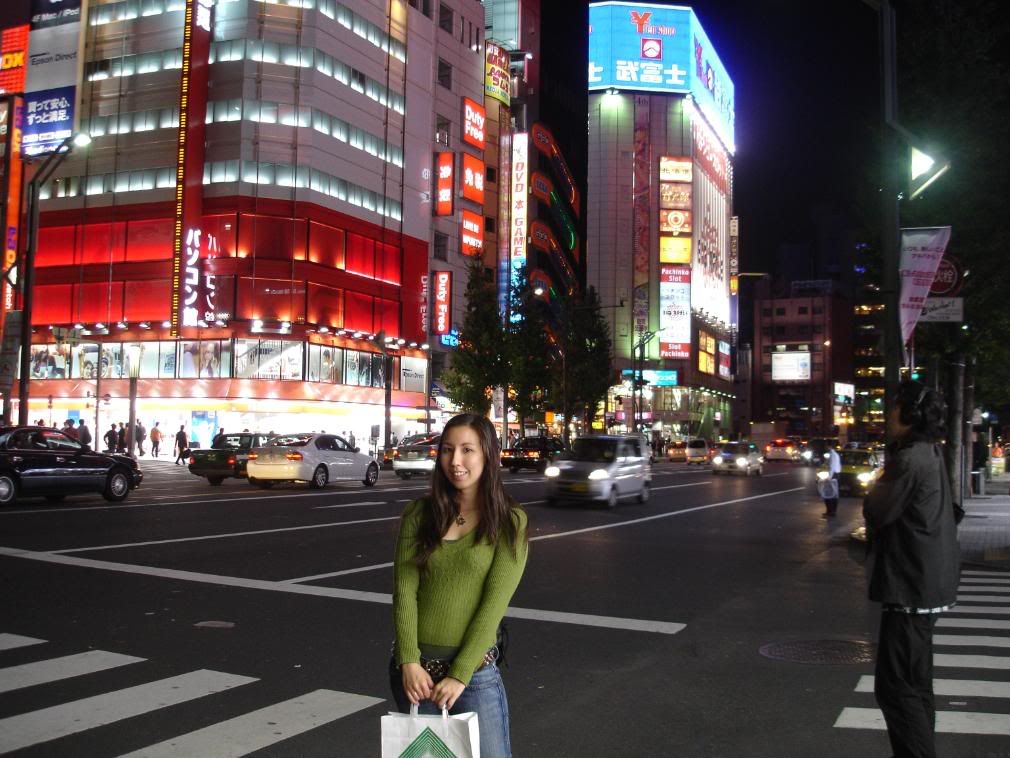
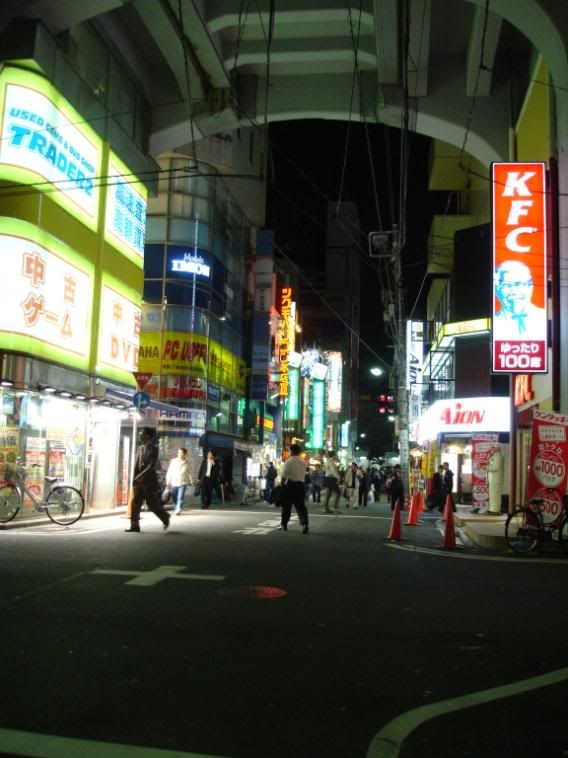
After we left there, we went to Akihabara just to quickly poke around, get a feel for where things were, and get a few pictures. It's definitely got a high density of electronics stores, and I will be sure to hit it up when I need to burn some DVDs to distribute my pictures. I was amazed, not at how tall the stores were, but how narrow and claustrophobic they felt on the inside. It was pretty weird-- it felt like being in a town house or something.
From Akiba, we unwisely took a train back to Shinjuku as opposed to Tokyo, which in hindsight would have been a better choice as that is where the line starts and we would have been guaranteed a seat on the Chuo line back to Fussa. Instead, we had to stand for a painfully long time from Shinjuku back to Tachikawa. I was able to snag Mom a seat about halfway through, though. Surprisingly, the train from Tachikawa to Fussa was fairly crowded, too, and she was not able to get a seat until the stop before ours.
We wound down the evening by watching some TV and drinking tea. After a shower, I was ready to crash out hard core.


We went to Tachikawa on Monday because Obaachan had a doctor's appointment. Because Hitoshiojichan doesn't have a car, we had to catch the train. It's a cheap ride-- only ¥160 each way, but we had to walk to the station, which is about a 20 minute walk for poor Obaachan. She's a real trooper, though, walking the whole way, a cane in one hand and Hitoshiojichan steadying her other arm. I was amazed and saddened at the same time; she's so old and frail but can walk for hours, but at the same time it is sad that she has to walk at all. From Tachikawa station, we took a taxi to the hospital to save time walking there.
The hospital was a truly depressing place. It was as modern, clean, and friendly as a hospital could be, but there were so many extremely old people there that I couldn't help but think about my own future, and that of my parents and family. Old women wheeled their even older mothers around in wheelchairs; old men pulled their old wives around by their hands, shuffling as fast as their ancient limbs could carry them. I did not enjoy being there. At least they had complimentary tea in the main lobby.
When we left, we walked the whole way back to the station. About halfway, Obaachan needed to rest, so we stopped at WINS Tachikawa-- a horse race betting location. It was for the most part empty, so while she rested Mom and I strolled around and looked at the massive amounts of betting machines. We could only imagine how busy it must be while races are in session.
We stopped at a noodle shop right next to the WINS because it advertised extremely cheap udon and soba (its lowest bowl being ¥200). We figured that men who had lost a lot of money at the races would have to eat there, as it was extremely affordable. The food wasn't too bad, and it was run by a singular friendly and hard-working
cook. Mom seemed to enjoy the food very much as she could finally relax her stomach muscles with the knowledge that she wasn't spending an arm and a leg to eat. Suzukoobachan's exorbitant spending habits stressed her out quite a bit.
Hitoshiojichan wanted to show me some arcades and a department store on the way back to the train station. UFO catcher machines are filled with the puffiest, most adorable plush toys ever. I saw ones with bunnies, baby seals, chicks, guinea pigs, and capybaras. There were machines filled with boxes of fish-shaped bean paste-filled cookies, fake jewelry, and cat paw-shaped gloves. There were limitless types of game machines, and there was even a floor totally devoted to Vegas-style slots (or are Vegas slots Japanese-style?). I was of course taken by the cuteness of the giant cavy plushies and wouldn't have minded winning one. But alas, those sorts of games are not intended to produce winners.
We stopped by Bic Camera on the way out, since Hitoshiojichan had to pick something up. It was not unlike a Fry's and the floors I visited were full of personal electronics, computers, laptops, and computer components, along with office and art supplies, books and magazines, and random tacky crap to adorn cellphones. I also got to see the humping dog USB device for sale-- it's less than 10 bucks. I'm intrigued.
I had always snickered at the sleepy Japanese on trains and wondered how they could fall asleep so fast-- until it happened to me on the way back from Tachikawa. As soon as I sat down, my eyelids began to droop and I felt very sleepy, despite my discomfort at being in a very public place. My family had already passed out on the bench in front of me-- perhaps it was a natural reaction that their sleepiness should pass onto me. I did not sleep on that trip, but I could now empathize with the other people on the train.
We stopped by Ozam, a grocery store, on the way back home. It was about this time that I began feeling unwell. My throat was dry and a little sore, my head was hurting, and I was becoming very fatigued. I bought some Kagome purple juice and looked forward to drinking it when we got home.
We got back around 2:30, and after a glass of juice I promptly changed clothes and went to sleep. I definitely did not feel well, and I suspected that I was coming down with a cold or maybe the flu. Mom woke me up at dinner time. I had another glass of juice, ate dinner, took a shower, and went back to sleep.
I stayed in bed all day yesterday. Mom had wanted to go to Tokyo, but because I was not feeling well, we did not go. I felt quite pathetic, as Obaachan is 4 times my age, in frail health, and was able to walk around all the previous day without complaint; here I was, tired from a light cough, and staying in bed. Sad. But for what it's worth, if I'm not feeling well, perhaps it's better that I'm not around her anyway, lest I pass along whatever is making me ill.
I stayed in bed again today, but I am feeling considerably better. Mom went to the Base to pick up some groceries and bought me some orange juice while she was there. We may go to Tokyo tomorrow, provided that we wake up early enough to catch the express line. I'm looking forward to it.
I am going to get ready for bed now, a little later than usual, but I'm optimistic about tomorrow.
I have craptons of catching up to do, since I have been hand-writing journal entries and I haven't gotten around to typing them up because, frankly, I haven't had the energy to do so. I'll post my regular daily logs later, but today I just want to share some oddity observations.
1. Putting a Japanese on a train is like putting a blanket over a budgie cage.
If riders don't have a friend, book, or cell phone to keep them distracted, then they totally pass out as soon as their butts hit the seat. On crowded trains, some people even nod off while standing up. It's really weird.
2. There are more vending machines per capita in Japan than anywhere else in the world.
This is not a joke-- this is a fact. And it's quite an apparent fact, as every block has at least one vending machine. Also, every beverage company stocks the machines with at least 15-20 unique choices, a third of them being some sort of coffee or tea. They also like convenience stores, and a konbini, as they are called, can be found every couple blocks or so.
3. Shoelaces are not en vogue.
Almost every single female I have seen wears some form of dress shoe or boot. Young men seem to like slip-on sneakers or dress shoes. Rarely have I seen shoelaces, and if I do see them, 1. the laces are fake and there may be a sneaky zipper on the side, or 2. the shoes are at least a size or two too large for the wearer. The important thing is that the show must be easily slipped on or off with little more than a tug. They take their slip-on shoe convenience seriously.
4. Neither, apparently, are sunglasses.
Mom explained that since their eyes are so dark, they aren't bothered by the light. The only people I have seen wearing sunglasses are advertisements with some serious-looking guy selling Boss Coffee, or kogal-looking girls with obnoxiously large and glittery sunglasses.
5. The more polite the woman is supposed to be, the higher pitched her voice gets.
Shop girls are especially annoying, as their voices reach frequencies only audible by dogs. It wouldn't be as irritating if it were just one at a time, but standing near the check-out counters of a grocery store subjects one to an entire chorus of squeaky ladies. It's like Office Space, just multiplied times 6 or 7.
6. Japanese television is freaking weird.
I watched a celebrity quiz show last night where the contestants would have to answer a variety of difficult history questions or solve logic puzzles. If they answered correctly, they'd be able to partake in some delicious-looking food. If they could not answer correctly, they'd have to sit and watch the others eat. And the commercials? Yeah.
7. Driving around Japan is freaking scary.
Everyone has these tiny, cute cars and they're sort of funny and adorable. But they're an absolute necessity-- Japanese roads are incredibly narrow and often have walls on either side. Unlike America, where there are specific lanes for turning onto intersecting streets and the norm is to wait for the car in front of you to turn, if there is no turn lane, in Japan if there is someone stopped in the road for whatever reason, everyone just veers around them if they have the room. Often they will swing into the opposing lane to get around the stopped car. This gets pretty scary if there is oncoming traffic, but people seem to be used to this as they're all ready to stop at a moment's notice. Then there are the added dimensions of pedestrians and bicycles that make this whole Japanese road thing insanely scary for me.
8. Wal-Mart has infiltrated Japan.
When shopping at the local Seiyu, a chain of department stores, I noticed that there were Mainstays brand housewares and Great Value brand food items. I also saw signs exclaiming the price rollbacks, and I thought "Huh. I wonder if Wal-Mart has stakes in this company." And it turns out that they totally do. It's pretty weird because you just don't expect that sort of thing outside America. It's kind of cool because they have good prices, but you have to really read the labels when you shop there because many of the products are made in China (as Mom found out when she bought some delicious-looking pickles that turned out to be totally gross).
9. People *really* like their dogs.
I've seen quite a few people walking their tiny dogs around town, but I was surprised to see that pet salons and pet sitters (amusingly, petto shitaa) are sort of a big thing here. It's hard to drive through a town and not see at least two or three cosmetic pet-related shops. I see mostly Dachshunds, Pembroke Welsh Corgis, Toy Poodles, Chihuahuas and Pugs here. Occasionally someone will be out walking their larger dog, like a Yellow Lab or something, but most people opt for the apartment-friendly tiny dogs.
10. They like to keep their streets free of litter-- except cigarette butts.
The streets are so incredibly clean here-- rare if ever will you find a can or wrapper sitting in a gutter. It's quite surprising, too, because there is a noticeable lack of trash cans. Mom said something about terrorists, but I think Japan has always been like that. The only thing I have noticed in abundance, though, are cigarette butts. The Japanese love to smoke, and it seems that their butts are the exception to the trash rule. While many people will politely carry their used butts with them until they get to a trash can, it seems that many more prefer to crunch them under their heel and walk away. It's pretty sad.
It feels as if I keep waking up earlier and earlier. Suzukoobachan made a delicious breakfast this morning of gohan, miso, natto, and some veggies left over from last night's dinner. This is the sort of breakfast I like to eat, and if I had the time to make and eat it every morning I would probably do so. Mom didn't want me to be bored at Obaachan's house, so she instead sent me off with Suzukoobachan for the day.
We went to Tachikawa Station and went shopping at the mall there. On the way, we talked about the differences between the Kanto and Kansai ways of speaking. I tried to convey the differences between English, Australian, and American English. We also compared onomatopoeias-- like, wan wan/woof, nyao/meow, kerokerokeropi/ribbit etc. She also explained that Japanese have difficulty speaking English because of the limited number of sounds they can make, and that although she took a couple classes, she never was able to pick it up. She assumed that Chinese people were able to speak English better, but I told her that they have their own set of problems and many Chinese were still difficult to understand.
When we reached the shopping area, we first stopped for lunch and got hegi soba, which is buckwheat noodles flavored with seaweed. Served alongside were shrimp and vegetable tempura, and at the end of the meal they brought out the water that was used to boil the noodles so it could be mixed with the dipping sauce and used as a soup. Suzukoobachan said they did that because the noodles had a lot of nutrients, and as such so did the water.
Japanese fashion is sort of weird. It obviously takes most of its influence from Europe, and not America as I did not see anyone who looked comfortable in what they were wearing. Every single person in the mall had some degree of fashion consciousness, and sometimes painfully so. An odd trend I've noticed amongst girls here is very short, cuffed shorts, paired with thigh-high lacy stockings and high heels. Boys prefer to squeeze into skinny jeans. Everyone has immaculate hair. Nobody wears sneakers (at least not ones with laces).
After poking around exorbitantly expensive stores for a little while, we hit up a cafe and grabbed some coffee and cake. She called her husband after that, and we agreed to meet him at the grocery department. The grocery department was very interesting, as it was slightly reminiscent of an old timey bazaar while maintaining the guise of an ultra-modern supermarket. Old men walked around the fruits and vegetables, shouting rasshai, rasshai! and announcing the virtues of their products. The fishmongers were the same (although I guess they weren't exactly fishmongers, but they sure acted like them). There was a lady on front of the pickles who also invited customers to come try them, and would pack and price a box for you once you made your decision.
After Kawasakisan came to meet us, we started heading back to Fussa. On the way, they called Mom and asked what she was doing for dinner. She said that they were making oden, and that Suzukoobachan should drop me off in Fussa to eat with them. The oden, which is a hot pot full of fried tofu, fish cakes, yam jelly blocks, konbu, and mochi in fried tofu bags, was delicious. I was still somewhat full from coffee and cake, yet Mom kept putting stuff on my plate. I was thoroughly stuffed by the end of dinner.
Again, running around all day has made me tired, so I will try to sleep somewhat early tonight.
We woke up around 8am and had toast for breakfast again. The morning was rather slow and uneventful. Suzukoobachan chatted with Mom for a couple hours before she dropped us off at Obaachan's. Mom and Hitoshiojichan set out to fetch lunch on his motorcycle, which she informed me was surprisingly not scary.
While Mom and Hitoshiojichan were out getting lunch, I showed Obaachan pictures on my laptop and again had to go through my broken Japanese phrases and pantomimes. She had a lot to say about the pictures, but unfortunately I could understand very little.
They brought back katsudon, which was pretty good, except it did not come with rice. This caused a little bit of consternation and amused bewilderment amongst Mom and the rest. "Where is the rice? It didn't come with rice? What kind of place sells katsudon without rice?" Hitoshiojichan brought out some tiny grapes that were about half a month too old and shriveled. They ended up being the most delicious grapes I have ever eaten-- they tasted sweeter than candy and had a pleasant gummy texture. Unfortunately, we were informed that they are now out of season.
The afternoon was spent chatting over tea and riceless katsudon leftovers. Suzukoobachan came at 5:30 to pick us up. She cooked a delicious dinner of pork fried with ginger, miso soup, shredded daikon, and gobo with carrots. Some figure skating competition was on, and it seemed the Japanese girls kept falling on their butts. It was pretty sad to watch, as one of the previous Olympic skaters totally wiped out just a few bars into her routine. After that point every time a skater went to jump we'd hold our breath just a little bit.
Again, I was exhausted today so I am going to crash pretty early.
The night before, my mom asked me to set an alarm for 9:00, since we were going to sleep around 2:30 and figured that would be plenty of time. Mom woke up at 8, though, and essentially woke me up, too. At the time I felt refreshed and awake.
I told my mother that I wanted to have bread and milk in Japan because my childhood memories told me that they were delicious. The previous night, Suzukoobachan bought some at the store, and she suggested that I have toast for breakfast since she had butter, jam, and peanut butter. I agreed, and she made the toast in an interesting way. She says that she hates the way bread tastes from a toaster (which is in the microwave, of all places), so she put a little water into a broiler pan and out the bread into the broiler. Two minutes and a flip later, I had toast!
I was not at all disappointed by the bread and milk. The bread, although it was toasted, tasted exactly how I remembered it-- thick, soft, and slightly chewy with a sweet taste. The butter was smooth and delicious, and the strawberry honey jam also tasted nice. What I loved, though, was the peanut butter. I normally buy natural, unsweetened peanut butter because I dislike the regular peanut butters that add tons of sugar and despite that still don't taste sweet. This stuff, though, was delicious. Very sweet, but in a mild way-- not harsh or sugary. All that with two glasses of milk and I was just happy as could be.
We drove to the hospital to pick up Obaachan. Suzukoobachan parked the car in the front of the hospital and ran in to get her while my mom and I waited-- and we found out that we were parked in front of the ER because not even 2 minutes after my aunt ducked into the building an ambulance came up, lights flashing and sirens blaring, and we were blocking its way. Panic set in, and my mom told me to move the car. I panicked, as well, so when I put it into drive, stepped on the gas and found it didn't move, I told her that I must be doing something wrong. All the while, the ambulance ended up parking on the street and wheeling in an obaasan lady on a stretcher into the ER. I guess we were super lucky that this is Japan because nobody got mad or anything; they did their jobs, asked us to please try to move the car if we could, and that was that. It turns out that I wasn't applying enough force to the accelerator the first time-- I was sort of gingerly tapping it because we were parked less than five feet away from the ER doors I figured it'd be bad form to plow my aunt's car through the hospital on my first day in Japan. If this had been the US I have a feeling that some fines or even jail time would have resulted.
A minute after the hubbub ended, Suzukoobachan appeared with my very tiny Obaachan on her arm.
Obaachan and Hitoshiojichan's apartment has changed so little from what I remember 18 years ago. It's really spooky. The only difference is that Obaachan is not able to move around too much on her own, so she has to sit most of the time. She is as stubborn as my mother, though-- when she wants to get up and go to the bathroom or the kitchen, she refuses our help when we rush to steady her arm or open doors for her. "Daijoubu, daijoubu!" she insists as she shuffles around.
She is so very old and obviously frail, but she is still talkative and energetic. She has a tiny old lady voice and small, graying eyes that sparkle when she laughs. When she is emphatic about a point she squeezes her eyes shut and nods her head sharply, the inflection in her voice confirming its importance. Her tiny hands, while weakened with age and arthritis, are still fairly deft, although she does spill a little tea when she pours it.
When we arrived at Hitoshiojichan's house (who wasn't home at the time), my mom and Suzukoobachan left almost immediately to grab some lunch. I was left alone with Obaachan, so I took the opportunity to show her some photographs I brought along with me from high school. My Japanese is pretty broken, so I was limited to saying things like "This is my Hawaiian friend" or "Annie-- middle school." I had some photos with sticky notes on the back from a Japanese presentation I did when I was in college, and Obaachan told me that my Japanese handwriting was very good (she did not comment whether or not she understood what I was aiming to say, though, haha).
Lunch was good. Mom and Suzukoobachan bought supermarket sushi and osekihan-- mochi rice with azuki beans, which is made as a festive dish on special occasions. Suzukoobachan ducked out after lunch to run some errands. The next few hours were a little boring for me because mom and Obaachan chatted the whole time and I was left with little to do than watch TV. Hitoshiojichan returned after a little while and brought out old photographs from the last time we visited.
Suzukoobachan picked Mom and me up around 5 and we went back to her house. I was very tired, so I passed out on the study floor. Every 15 minutes or so someone would come in, turn on the light, and ask if I was doing okay. It was sort of annoying because all I wanted to do was take a nap without interruptions, but word did not spread around that that was my intention. At 6:30 we went to a fairly upscale Chinese restaurant in a nice hotel for dinner. The prices were rather steep for the food they served, but at least it tasted alright.
I feel so dehydrated here. In America I'm used to drinking at least a glass or two of water with every meal. Here, they only serve tiny cups of tea and, in the rare occasion that they do serve water, it is in equally tiny glasses. This has probably made my jetlag even worse than it would be normally; after my shower I am going to crash.
Our plane boarded half an hour later than scheduled because the in-seat movie screens weren't working in the center 5 aisles. I guess 13 hours with nothing to look at except the headrest in front of you can be boring. I took advantage of the neat little setup and ended up watching some Without a Trace (during which I fell asleep), Shrek the Third, Everybody Hates Chris, a neat movie about the life of Vivien Thomas (starring Mos Def and Alan Rickman-- LOVE), and a depressing movie about a couple in which the wife comes down the Alzheimer's. I got halfway through Ocean's 13 when we went into final approach.
We were fed a snack half an hour into the flight, which was the normal soda and a bag of crunchy things. Lunch was around 12:30, and we got a choice between chicken or pork swimming in stir-fryish gravy alongside some sad green beans and rice. I honestly have had better Lean Cuisine. Served with it were a piece of what looked to be a cucumber roll and shrimp sushi, salad with creamy vinaigrette, and a conspicuously out of place dinner roll with margarine.
Soon after lunch, I curled up into my seat, put on some Without a Trace (his fake American accent fools nobody-- he is so obviously Australian), and fell asleep for the next three hours. At some point, the male steward reached over me and closed my window, which was a good move because the sun was high and bright for the whole trip.
When I came to, I felt strangely refreshed. I peeked out the window, and to my surprise I saw lots of snowy mountains. Knowing that we had to be long past Colorado, I loaded up the flight path. While I waited for it, I looked out the window, and noticed these huge, long, striped white trails that bisected the mountains and emptied into a wated body to the south. I had taken a physical geography class, so I immediately became excited.
GLACIERS! THOSE ARE FREAKING GLACIERS! :D :D :D :D
You hear about how large they are and you see pictures of them in books, but it's difficult to appreciate glaciers until you actually see them with your own eyes. And when Anchorage came along about an hour later, I had something to compare give a sense of scale-- they are GIGANTIC. It's amazing how big they are, and it's difficult to imagine 1. that they even formed at all, and 2. that they might be under threat of melting. That's pretty depressing to think about.
According to the flight path, they were the Bering Glaciers.
Around this time we got a little ham sandwich to tide us over until the next meal. There was nothing special about it, but it wasn't half bad tasting. About a two hours before landing we got pizza with a nice pastry-like crust.
At 2:15, we landed in Narita International Airport.
My mother told me horror stories about the lengthy line in which I would have to stand waiting to get through customs; this did not happen at all-- it took all of 2 minutes after retrieving my bags to turn in my cards and wait for my mother in the terminal.
Unfortunately, I had not studied the map of the terminal well before departure, nor did I feel adventurous enough to explore it throroughly because where I thought I was supposed to meet my mother ended up not being the place where I was supposed to meet my mother. Her flight arrived the same time that mine did, as hers was also delayed (our initial flights were supposed to get in simultaneously, too), and she and I waited in the terminal for each other for about an hour and a half. She was incredibly understanding, as she said that she asked many many airport workers where areas designated by the airport to meeting were, and they had no clue.
From there, we caught a Keisei train from Narita to Yawata. This was all fine and good, except they don't have escalators to get to and from the platforms. My mom is a persistent and strong-willed person, so when I told her I'd carry her bags for her she just snorted and hauled her stuff on her own. She broke her leg during the summer and I didn't want her to injure herself before her visit to Japan even began, so I would run my stuff up or down the stairs, set them down, run back to meet my mom, grab her stuff, and take it to where my stuff was. Luckily there weren't very many people to worry about snagging my things. I haven't exercised in a long hot while, so in the end I was pretty tired, especially considering I had to do this numerous times.
Anyhow, from Yawata we took a Tooei Shinjuku train to Shinjuku station. Yawata is the very end of the line, so our train was empty when we boarded and spilling over with people by the time we disembarked. Shinjuku, minatomachi indeed. The station was PACKED. Granted, we get there about 6:15, but still-- it was a buzzing sea of black-haired heads bobbing around. Quite confusing. I was lucky that my mom was wearing a somewhat uniquely colored shirt because otherwise, I would have lost her.
We spent a little while in Shinjuku Station first looking for a bathroom, and then trying to figure out how to use the pay phones. Since my mom didn't want to chuck 100 yen into the thing, use 3 minutes and get no change, she insisted instead on putting in 10 yen, talking until the thing hung up (one minute), and then repeating the process until she got her message to my aunt that we would call her when we arrived in Nakagami Station. And, at the end of this, she said "Gaaah, I spent 40 cents on that phone call! How expensive!!" Sigh.
The JR train we took from Shinjuku to Nakagami was a nightmare. We had to stand the whole time because it was packed tighter than a sardine can, but the Japanese are professional train riders and will literally mow you down if you're standing in their way at their stop. I did get knocked down at one point, which is utterly embarrassing. I was so happy when we were able to get off that train (and that we were standing on the side the doors opened, thank God).
Out of pure coincidence, my uncle happened to be riding the same train, so when we disembarked we heard "Oneesan?" and ran into Kawasakisan, Suzukoobachan's husband. He had a cell phone, so he spared me from having to operate a pay phone at my mom's pace. About five minutes later, Suzukoobachan arrived in her little car, and we went to a little Japanese restaurant to grab some dinner.
Mom and I both ordered nabeyaki udon with a side of maguro paste over rice. Kawasakisan got tonkatsu and I have no idea what Suzukoobachan got, hah. Oh man, they put fried mochi into the udon, which made it so much more delicious than I can describe. The noodles were made in-house, the shiitake mushroom was fresh, not reconstituted, and they tossed in some chrysanthemum leaves, which I had never eaten before (they taste like how the plant smells. Go figure).
I was tired during dinner, but nothing could compare to how tired I was when we got to Suzukoobachan's house. She made tea and put out odango and what looked like mochi and bean paste on a stick. She also brought out mizuyoukan, which is like a thick red bean pudding in a cup. I showed them pictures of my pets and some pictures from my father's Air Force retirement. After a couple hours of chatting, my mom and I finally were able to grab a shower and go to sleep.
Oh, Japanese bathrooms. I LOVE them. The toilet has its own little closet, and the water that refills the toilet is what you wash your hands with (so efficient! It's clean water that goes into the tank, why not use it to wash your hands?) so there is no sink. The sink is in the same area as the washing machine and has a medicine cabinet and mirror about it. The bathroom is just that-- the entire room is used for bathing. There is a tub with high walls for soaking, and an area near the door used for washing and showering. There are two hooks for the shower wand, the high hook for standing up and the low hook for squatting or sitting. The spigot swivels between the tub and the shower area so that you can either fill the tub or fill your wash bucket. The idea is that you fill the tub with hot water to soak, but before you get in you wash your body first in the showering area so that you do not get the soaking water dirty.
We slept without pillows because Suzukoobachan does not have any extras. Mom says we'll get some at the BX. I look forward to that.